September 20, 2026 | 02:29 pm
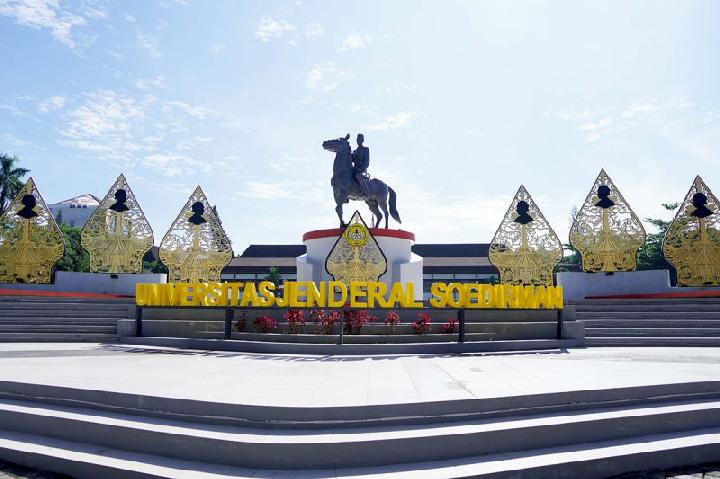
The government must ensure that university autonomy does not turn into the commercialization of education that burdens students.
IT is time for the government to fundamentally evaluate the independent-track student admissions system. Repeated corruption cases show that universities’ broad authority to determine student admission fees creates room for transactions and abuse of power.
The arrest of Jenderal Soedirman University Rector Akhmad Sodiq is the latest evidence. In addition to Sodiq, the Corruption Eradication Commission (KPK) arrested Unsoed Vice Rector III Norman Arie Prayogo and Academic Affairs Division Head Eko Sumanto on August 20, 2026. They are suspected of conspiring with three people from outside the university to extort up to Rp650 million from each prospective student’s parents.
This is not the first case. In 2022, the KPK arrested University of Lampung Rector Karomani for allegedly accepting bribes from the parents of prospective students seeking admission through the independent track. Although the KPK issued a circular in 2023 to improve admissions governance, the anti-graft agency still found suspected irregularities at Diponegoro University and Sebelas Maret University in 2024.
The recurrence of such cases shows that the problem is not merely the behavior of rogue individuals. There is a flaw in an admissions design that brings together the authority to determine who is admitted with universities’ financial interests.
State universities with legal entity status have broad authority over academic, financial, and asset management, including admitting students through the independent track. The problem arises when such autonomy is accompanied by pressure to secure their own funding. Under these conditions, students can easily be viewed not only as recipients of educational services, but also as sources of revenue.
The government should ensure that education costs remain affordable so that the ability to pay does not determine access to higher education. Therefore, universities’ funding needs should not be met by imposing high fees on students through certain admission tracks. The independent track must not be commercialized simply because universities have the discretion to regulate both selection and fees.
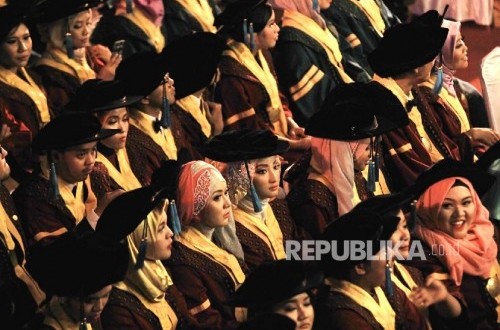
Data from the Ministry of Higher Education, Science, and Technology in 2026 show that 871,000 people registered for admission to state universities, while only 256,000, or around 29 percent, were accepted. The scarcity of seats makes access to state universities highly valuable. When universities also determine who gets those seats, weak oversight creates room for transactions.
The impact goes beyond corruption. When the ability to pay affects the chances of admission to state universities, the principle of meritocracy is eroded, and higher education moves further away from its function as a means of social mobility. The drive to pursue revenue also risks prompting universities to admit students beyond the capacity of their lecturers and facilities.
Therefore, the government needs to reform the design of the independent admissions track, particularly at state universities with broad financial autonomy. The selection process must be transparent and auditable, admission criteria must be announced, and all fees must be determined and published from the outset. The funding model for state universities also needs to be reviewed so that autonomy does not turn into an incentive to extract as much money as possible from students.
The state is obliged to ensure fair access to higher education. Higher education is a public service, not a market that may exploit strong public demand.
Dozens of Indonesian Regional Heads Study Public Service Practices with Ex-Singaporean PM
18 November 2025

The regional heads learn basic public services in the field of education, health, public transportation, and waste management.
Indonesian Police Admit Public Is Increasingly Reporting Incidents to the Fire Department
18 November 2025
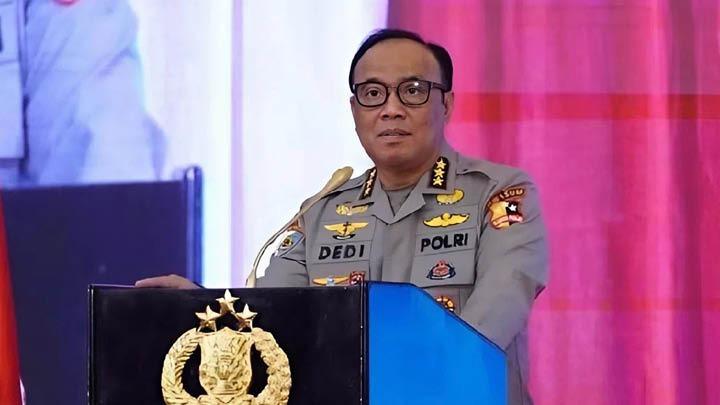
The Deputy Chief of the Indonesian National Police admits to the slow response to citizen reports and acknowledges that citizens tend to report more to the fire department.
Vietnam's Hanoi Expands Public Services with Mobile Offices Across the City
26 September 2025

Hanoi's Vietnam will expand public services by setting up mobile service offices and service posts in residential areas and supermarkets.
Pakistani Mayors Keen to Emulate Jakarta's One-Stop Integrated Public Service
9 Juli 2024

Mayors of the Pakistani cities of Karachi, Sukkur, Turbat, and Kashmir are keen to emulate Jakarta's one-stop integrated public service.
Azerbaijan, Indonesia Agree to Step Up Cooperation on Acceleration of Public Service
2 Juli 2024

Indonesia and Azerbaijan have agreed to take their cooperation in public service acceleration to the next level.