
August 6, 2026 | 09:49 am
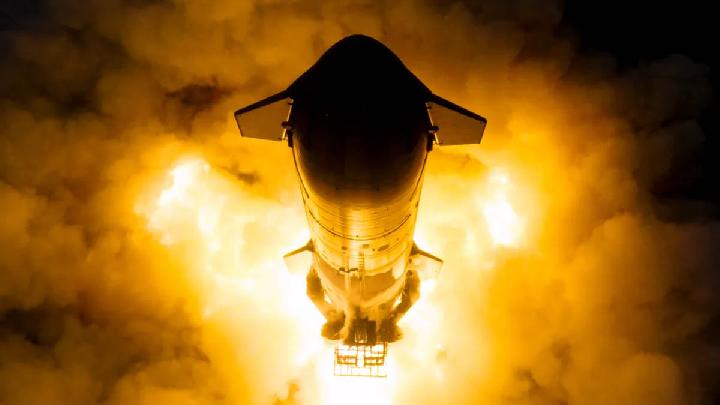
TEMPO.CO, Jakarta - A discarded SpaceX Falcon 9 rocket stage has crashed into the Moon, creating what scientists believe is a new crater and providing researchers with a rare opportunity to better understand lunar impacts and improve safety for future Moon missions.
The upper stage, which had been drifting through space since completing its mission in January 2025, struck the lunar surface early Wednesday at an estimated speed of about 5,400 miles per hour (8,700 kilometers per hour). The impact occurred near the Moon's Einstein Crater, one of its best-known landmarks.
The collision was detected by the European Southern Observatory's Very Large Telescope at the Paranal Observatory in Chile. Researchers confirmed that the impact generated a plume containing sodium and lithium gas that remained visible for several minutes.
Scientists believe the sodium originated from lunar soil, while the lithium likely came from the rocket itself.
According to CNN, researchers also used the observatory's Ultraviolet and Visual Echelle Spectrograph to identify the rocket's chemical signature after impact. Additional data from the Enhanced Resolution Imaging Spectrograph (ERIS) are now being processed to search for visible evidence of the collision.
The Falcon 9 rocket had originally launched two commercial lunar landers before its upper stage remained in deep space after completing its task. Unlike missions to low-Earth orbit, where rocket stages are typically guided back into Earth's atmosphere to burn up, spacecraft traveling farther into space require different disposal procedures.
According to SpaceX, long-term gravitational interactions involving the Earth, Moon and Sun, combined with solar radiation, gradually altered the rocket stage's trajectory until it was placed on a collision course with the Moon.
Although the impact posed no threat to Earth, scientists estimate it may have created a crater measuring between 20 and 30 meters in diameter.
Because the collision occurred on the sunlit side of the Moon, the brief impact flash was difficult to observe directly. Most astronomers instead focused on detecting the resulting cloud of debris and gases.
As reported by BBC, researchers consider the event an unusually valuable scientific experiment because they already know the rocket's size, mass, speed and impact location. That makes it possible to compare real observations with computer models of how impacts excavate craters, eject debris and generate seismic vibrations beneath the lunar surface.
NASA's Lunar Reconnaissance Orbiter is expected to photograph the impact site in the coming days, allowing scientists to compare images taken before and after the collision. South Korea's Danuri lunar orbiter also passed near the impact area shortly beforehand and is analyzing its own observations before releasing any images.
Researchers say understanding how impacts distribute rock and dust across the lunar surface will help engineers design safer spacecraft, landing sites and future lunar habitats under NASA's Artemis program.
The event also highlights a growing challenge as lunar exploration accelerates. Unlike Earth, the Moon has no atmosphere capable of burning up space debris before it reaches the surface. As more countries and private companies send missions toward the Moon, managing discarded spacecraft and rocket components will become increasingly important.
While dozens of human-made spacecraft have intentionally or accidentally struck the Moon since the Soviet Union's Luna 2 mission in 1959, scientists say opportunities to observe such impacts with modern instruments remain rare.
For planetary scientists, the unexpected collision provides an opportunity to refine models of lunar geology, better understand how impact craters form, and improve preparations for the next generation of human exploration beyond Earth.
Read: SpaceX Rocket Crashes into Moon: Here's How It Happened
Click here to get the latest news updates from Tempo on Google News
SpaceX Rocket Crashes into Moon: Here's How It Happened
20 jam lalu
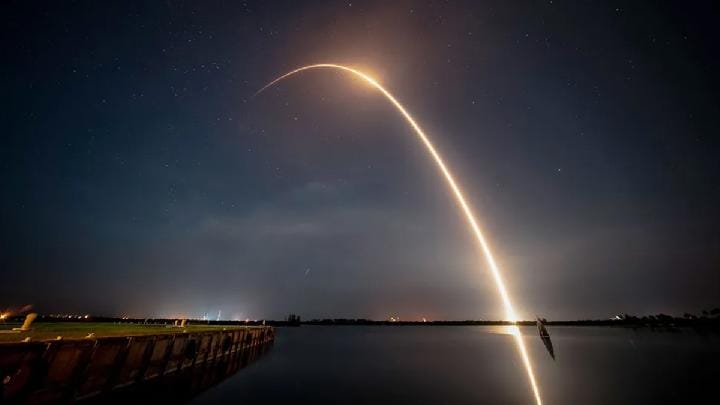
On August 5, 2026, a SpaceX rocket collided with the Moon, but it's not a surprise for scientists. Here's how it happened.
Starship Completes 1st Test Flight Since SpaceX IPO
11 hari lalu
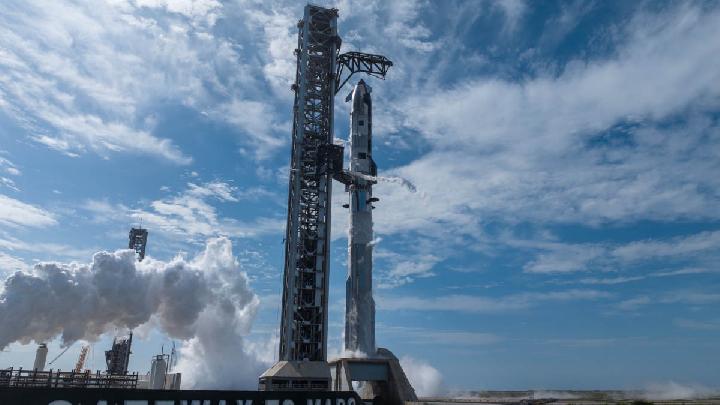
SpaceX's Starship splashed down in the Indian Ocean, completing its 13th test flight and first since the company's June IPO.
China Retrieves Booster in Reusable Rocket Breakthrough
26 hari lalu

China has joined the small group of space powers that can now recover an orbital-class booster rocket.
Who Is Michael Truell, CEO Behind SpaceX's $60 Billion Deal?
48 hari lalu

Meet Michael Truell, the CEO of AI startup Cursor, which was formally acquired by Elon Musk's SpaceX in a massive $60 billion deal.
SpaceX IPO Makes Elon Musk World's First Trillionaire
54 hari lalu

SpaceX's Nasdaq debut saw shares surge 25 percent, making Elon Musk the world's first paper trillionaire.
Musk's SpaceX IPO Holds Both Promise and Peril
55 hari lalu
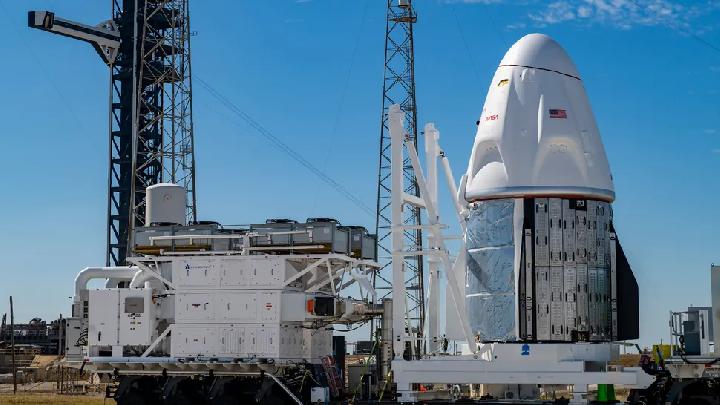
SpaceX, Elon Musk's rocket and AI firm, offers investor potential, but its futuristic, unproven plans also carry major financial risks.
Elon Musk's SpaceX Aiming to Raise $75bn in Record IPO
4 Juni 2026
Elon Musk's SpaceX is planning to raise around $75 billion through what would be a record-breaking initial public offering (IPO).
Blue Origin's New Glenn Rocket Explodes on Launch Pad
29 Mei 2026

A hot-fire test of the New Glenn rocket went awry, resulting in the rocket exploding into a fireball.
SpaceX Launches Biggest Starship Rocket Yet in Test Flight
23 Mei 2026
SpaceX conducted its 12th Starship test flight just two days after Elon Musk announced plans to take the company public.
Elon Musk's SpaceX Files for What Could Be a Historic IPO
21 Mei 2026
Elon Musk's SpaceX could seek to raise $75 billion in the IPO, in what could be the biggest-ever market debut.