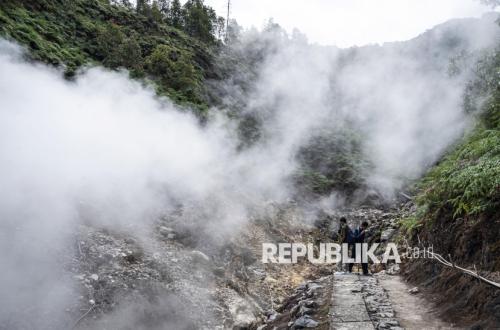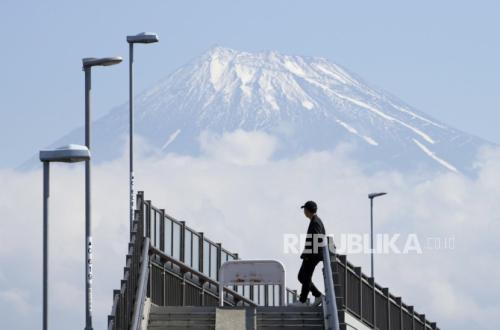
TEMPO.CO, Jakarta - Several volcanoes in Indonesia have erupted within days of one another. At least three volcanoes, Mount Semeru, Mount Ili Lewotolok, and Mount Ibu, erupted on Monday, September 7, 2026. They are located in three different provinces: East Java, East Nusa Tenggara and North Maluku.
Days earlier, Mount Anak Krakatau in the Sunda Strait also experienced repeated eruptions on September 4-5, producing incandescent rocks and volcanic ash. The volcano, which has been at Alert Level III since July 2, erupted again at 7:10 a.m. local time on September 6, releasing lava that could be accompanied by incandescent rock fragments.
The timing of the eruptions may seem unusual, but experts say the activity does not mean the volcanoes are connected or that one eruption triggered another.
So, what explains the near-simultaneous activity?
Why are several volcanoes erupting together?
According to Daryono, a member of the Indonesian Association of Disaster Experts (IABI), the simultaneous activity is part of the broader tectonic dynamics of Indonesia's location within the Pacific Ring of Fire.
The timing, he said, is generally a matter of spatial and temporal coincidence rather than evidence that the volcanoes are directly connected.
"Indonesia lies within an active plate-subduction system, with dozens of active volcanoes currently at Alert or Advisory status," Daryono said in a written statement on Monday, September 7.
Indonesia sits in a complex convergence zone where the Indo-Australian, Pacific and Philippine plates are subducting beneath the Eurasian Plate. This intense tectonic activity feeds numerous volcanic systems across the archipelago.
Although several volcanoes have shown heightened activity within a relatively short period, Daryono said there is no single underground network linking their magma chambers.
Instead, each volcano has its own volcanic system. An eruption occurs when pressure from magma and volcanic fluids builds to a critical level within that system.
Do eruptions trigger one another?
The simultaneous eruptions do not mean that one volcano has triggered another.
Daryono said the volcanoes may simply have reached critical thresholds in their individual systems at roughly the same time. Differences in ash-column heights also reflect variations in eruption dynamics, magma viscosity and volcanic gas content.
The recent eruptions illustrate these differences.
Anak Krakatau's ash spread as far as Banten, Jakarta, West Java, Lampung and Bengkulu, suggesting that a substantial amount of volcanic material was propelled high into the atmosphere. Once there, ash can be transported over long distances by regional wind circulation, including monsoon winds.
By comparison, Semeru produced an ash column reaching about 1,000 meters above the summit, while Ili Lewotolok's reached 600 meters and Ibu's 400 meters.
These lower columns indicate more localized eruptive energy, although ash-column height can vary depending on several factors. These include gas pressure inside the volcanic conduit and thermal buoyancy, which determines how an eruption column rises as it interacts with the surrounding atmosphere.
What determines how explosive a volcano is?
The behavior of an eruption is influenced by both the physical and chemical properties of the magma.
One important factor is silica, or SiO2, content. The amount and composition of volcanic gases, including water vapor, carbon dioxide and sulfur dioxide, also play a major role.
Magma with high viscosity and abundant gas tends to produce more explosive eruptions. As pressure builds, the expanding gas can fragment the magma into fine volcanic ash particles, often smaller than a millimeter.
Those fine particles can remain suspended in the atmosphere and travel much farther when carried by winds.
Volcanoes with more fluid magma or relatively open conduits, known as open-vent systems, tend to release gas pressure more frequently. Their eruptions can occur repeatedly through medium-sized eruption columns, with impacts generally concentrated closer to the volcano.
This helps explain why several volcanoes can erupt within the same period while producing very different effects.
What does this mean for Indonesia?
The recent activity highlights the challenges of living in one of the world's most volcanically active regions.
The fact that several volcanoes erupt around the same time does not necessarily signal a single, larger volcanic event beneath Indonesia. Rather, each volcano must be monitored based on the behavior of its own magma and gas system.
For communities living near active volcanoes, authorities therefore rely on individual alert levels, eruption observations and hazard zones rather than treating simultaneous eruptions as evidence of a common underground trigger.
In other words, Indonesia's volcanoes may share the same tectonic setting, but they do not share a single magma chamber.