TEMPO.CO, Jakarta - Stretching roughly 40,000 kilometers around the Pacific Ocean, the Ring of Fire is one of the most geologically active regions on Earth. It is home to hundreds of volcanoes and is associated with about 90 percent of the world's earthquakes.
For countries along this vast horseshoe-shaped zone, volcanic eruptions and earthquakes are part of a broader geological story driven largely by the movement of tectonic plates. From Japan and Indonesia in Asia to Chile and Mexico in the Americas, the Ring of Fire links some of the world's most active volcanic regions.
According to National Geographic, a string of 452 volcanoes extends from the southern tip of South America along the Pacific coast of North America, across the Bering Strait, through Japan and into New Zealand. Here are eight countries highlighted in connection with the Ring of Fire and some of their notable volcanic areas.
8 Countries on the Pacific Ring of Fire
1. Indonesia
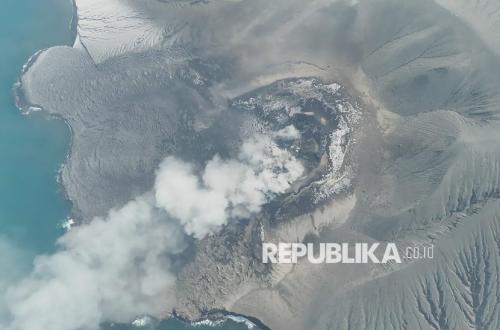
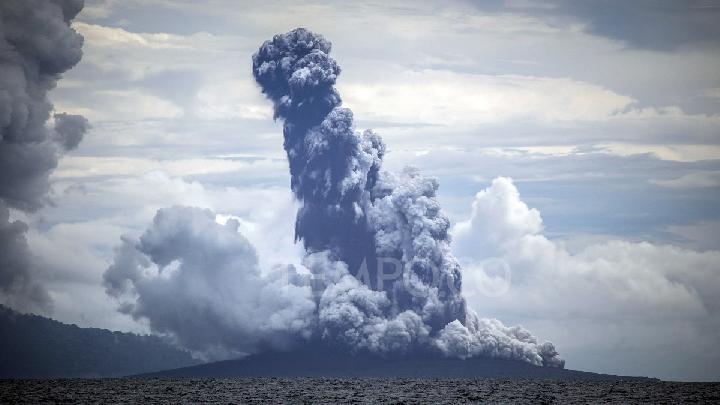
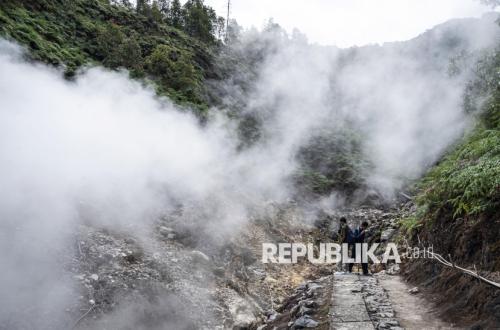
Indonesia is home to Krakatau, one of the world's best-known volcanoes. The volcano's catastrophic 1883 eruption destroyed the island and sent volcanic gas, ash and rocks as high as 80 kilometers into the atmosphere.
A new volcanic island, Mount Anak Krakatau, has since formed at the site and has experienced repeated minor eruptions.
The volcanic activity is linked to the subduction of the Australian Plate beneath the Eurasian Plate, making Indonesia one of the key volcanic regions along the Ring of Fire.
2. Japan
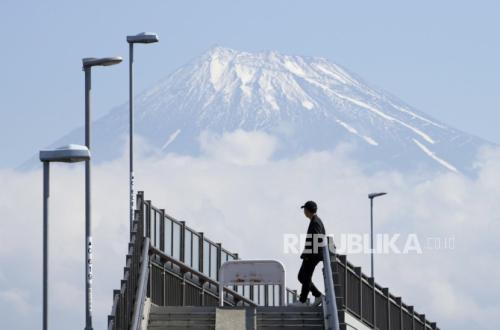
Japan is one of the Ring of Fire countries with a particularly prominent volcanic landscape. Mount Fuji, the country's tallest and most famous mountain, is an active volcano.
Mount Fuji last erupted in 1707. The volcano sits at a triple junction involving the Amur, Okhotsk and Philippine plates, making the region an important site of tectonic activity.
Japan's position along the Ring of Fire also exposes the country to frequent earthquakes and other geological hazards.
3. New Zealand
New Zealand sits on the southwestern section of the Ring of Fire and is home to Mount Ruapehu, one of the region's more active volcanoes.
According to National Geographic, Mount Ruapehu experiences minor eruptions roughly every year, while major eruptions occur about every 50 years. The volcano rises 2,797 meters above sea level.
Mount Ruapehu forms part of the Taupo Volcanic Arc, where the Pacific Plate is being pushed beneath the Australian Plate.
4. Russia
Russia's Kamchatka Peninsula forms part of the western edge of the Ring of Fire, where some of the world's most active volcanic areas are concentrated.
The Ring of Fire extends northward from the Pacific through the Kamchatka region before continuing toward the Bering Strait and the Aleutian Islands.
Kamchatka is therefore an important part of the volcanic arc that stretches across the western Pacific.
5. United States
The United States has several major volcanic and seismic regions associated with the Ring of Fire, including Alaska's Aleutian Islands and the Cascade Mountains in the western part of the country.
The Aleutian Islands contain 27 of the United States' 65 historically active volcanoes. They run parallel to the Aleutian Trench, where the Pacific Plate is subducting beneath the North American Plate.
The western U.S. is also home to Mount St. Helens in Washington state. Its 1980 eruption lasted nine hours and covered surrounding areas with volcanic ash.
The San Andreas Fault, meanwhile, is one of the Ring of Fire's most active faults. Movement along the fault contributed to the devastating 1906 San Francisco earthquake.
6. Mexico
Mexico is home to the Trans-Mexican Volcanic Belt, one of the major volcanic areas on the eastern half of the Ring of Fire.
Among its most notable volcanoes is Popocatépetl, one of Mexico's most active and dangerous volcanoes. National Geographic records 15 eruptions since 1519.
The volcano is located near Mexico City and Puebla, putting more than 20 million people living nearby within potential danger from a destructive eruption.
Popocatépetl's activity is linked to the subduction of the Cocos Plate beneath the North American Plate.
7. Chile
Chile lies along the western edge of South America, where the Andes Mountains run parallel to the Peru-Chile Trench.
The region was formed as the Nazca Plate subducts beneath the South American Plate, creating conditions favorable for extensive volcanic activity.
The Andes are home to Nevados Ojos del Salado on the Chile-Argentina border, which National Geographic identifies as the world's highest active volcano at 6,879 meters.
8. Argentina
Argentina shares one of the Ring of Fire's most significant volcanic landscapes with neighboring Chile. The Andes run along the countries' border, alongside the Peru-Chile Trench.
Nevados Ojos del Salado, the world's highest active volcano, rises along the Chile-Argentina border to 6,879 meters.
The volcanic activity in this region is closely connected to the subduction of the Nazca Plate beneath the South American Plate.
The Ring of Fire therefore extends beyond a simple chain of volcanoes. It reflects the enormous forces created as tectonic plates collide, separate and slide past one another around the Pacific, shaping landscapes and influencing seismic activity across multiple countries.
Indonesia is among the countries most directly affected by these geological forces. Its location along the Ring of Fire has created a landscape dotted with active volcanoes, including Mount Anak Krakatau. Recent activity at the volcano is a reminder that the geological forces shaping the region remain active today. But Anak Krakatau is not the only Indonesian volcano showing increased activity. Five volcanoes have recently erupted or shown significant activity, prompting authorities to closely monitor their conditions and warn residents and visitors to stay away from designated danger zones. For a closer look at the latest volcanic activity in Indonesia, read Which 5 Indonesian Volcanoes Are Showing Increased Activity? Anak Krakatau Among Them.
Read: Indonesia Opens Alternative Airports 24 Hours After 8 Airports Close Due to Ash
Click here to get the latest news updates from Tempo on Google News