TEMPO.CO, Jakarta - Indonesian civil society and community-based organizations can now access small grants of up to US$75,000 (approximately Rp1.2 billion) through the Global Environment Facility’s Small Grants Program (GEF SGP). Grantees will also benefit from Food and Agriculture Organization (FAO) technical assistance to support community-led initiatives for better environmental outcomes and livelihoods.
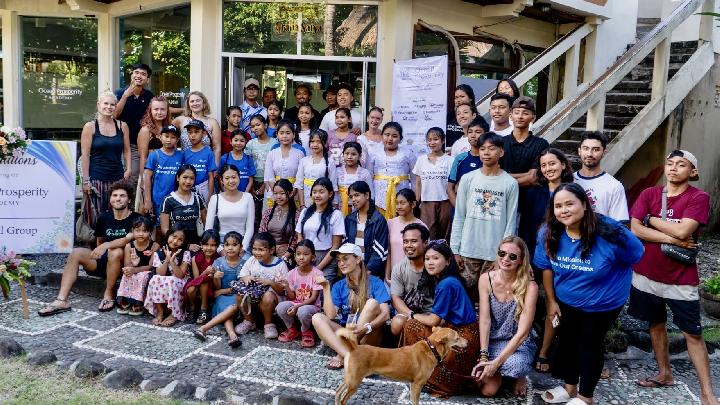
FAO has joined the GEF Small Grants Program under its Eighth Operational Phase (GEF SGP-OP8) and is implementing the program across 13 countries, including Indonesia. The GEF SGP is a long-standing flagship initiative that scales innovative grassroots actions by empowering civil society, ensuring the inclusion of customary communities (Masyarakat Adat), youth, women, and persons with disabilities.
In Indonesia, FAO partners with the non-profit Yayasan Bina Usaha Lingkungan (YBUL) as the executing agency, which has managed the GEF SGP in the country since 1997. The two organizations signed an Operational Partnership Agreement on Wednesday, May 13, 2026, at the FAO Indonesia office in Jakarta.
"In addressing the global challenges we face today, we need a bottom-up approach that enables local people to sustainably manage natural resources and foster their livelihoods. FAO is committed to providing technical support to GEF SGP grantees, strengthening grassroots communities' capacity to deliver their own solutions. FAO and YBUL are already preparing to expand this partnership to reach more communities across Indonesia's vast archipelago," said Rajendra Aryal, FAO Representative in Indonesia and Timor-Leste, in a written statement received today, May 13.
Priority Areas
In Indonesia, SGP OP8 will focus on Buleleng Regency in Bali; Lombok in West Nusa Tenggara; and Labuan Bajo, Komodo National Park, Sumba, and Alor in East Nusa Tenggara. These regions were identified through a participatory process involving national and local GEF SGP stakeholders.
They were selected based on high biodiversity value, limited prior exposure to GEF SGP financing, and pressing environmental challenges. Local communities face climate-related production losses, erosion of traditional crop varieties, and limited market access for local producers—despite thriving regional tourism industries.
Thematic Priorities
GEF SGP will prioritize financing for initiatives aligned with Indonesia's development plans and global commitments, as well as GEF SGP-OP8's five thematic priorities.
These include: (1) community-based conservation of threatened ecosystems and species; (2) sustainable agriculture, fisheries, and food security; (3) low-carbon energy access co-benefits; (4) local-to-global coalitions for chemicals and waste management; and (5) sustainable urban solutions.
Beyond Financing
Beyond direct grants, GEF SGP will equip grantees with access to knowledge and skills development, as well as technical assistance facilitated by FAO. Adopting business-oriented approaches, the program will also match grantees with potential markets and the private sector to achieve greater scale and impact.
"Our goal is to localize Indonesia’s international commitments, from the FOLU Net Sink 2030 to the Kunming-Montreal Global Biodiversity Framework, by empowering those who are the true custodians of our biodiversity: our local and indigenous communities,” said Yani Witjaksono, Executive Director of Yayasan Bina Usaha Lingkungan, in the same press statement.
Toward Inclusive Sustainable Development
Calls for proposals will begin in June this year. With financing and technical support, community-driven projects are expected to deliver measurable environmental benefits while addressing cross-cutting issues such as poverty reduction, social inclusion, and gender equality.
Over the 2026-2029 period, the GEF SGP OP8 aims to support over 14,000 beneficiaries, including 7,200 women, 2,300 youth, and 2,300 persons with disabilities. The team will ensure that at least 30 percent of grants go to women-led groups, 10 percent to youth-led groups, and 5 percent to customary communities to ensure inclusivity.
Projects are expected to help restore over 6,400 hectares of land, improve management across 110,000 hectares of landscapes and 8,000 hectares of seascapes, and mitigate an estimated 640,000 CO2e of greenhouse gas emissions. Outcomes will be tracked through FAO's online GEF SGP Portal.
To ensure an impartial and transparent selection process, FAO and YBUL have appointed 11 members to the GEF-SGP-OP8 National Steering Committee. The members represent civil society, the Indonesian government, and the private sector to ensure strong national ownership.
Read: FAO, UN Women Launch Women Farmers Climate Campaign in Indonesia
Click here to get the latest news updates from Tempo on Google News