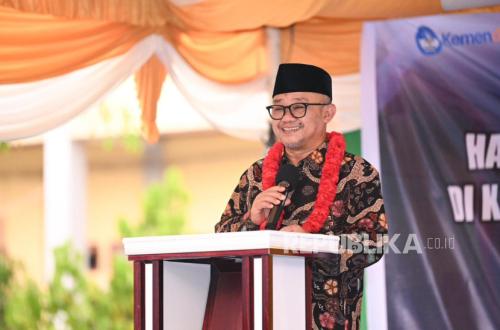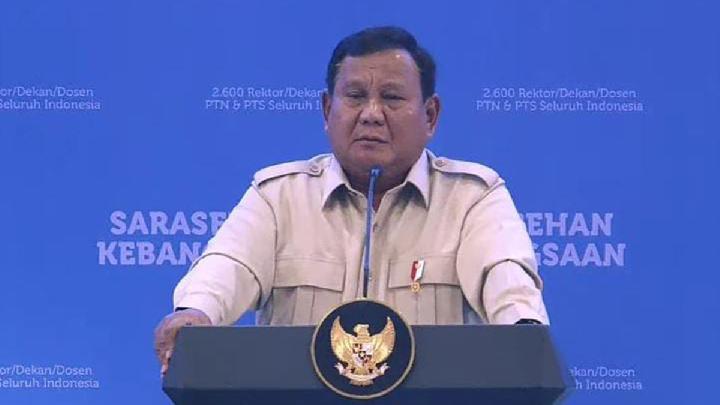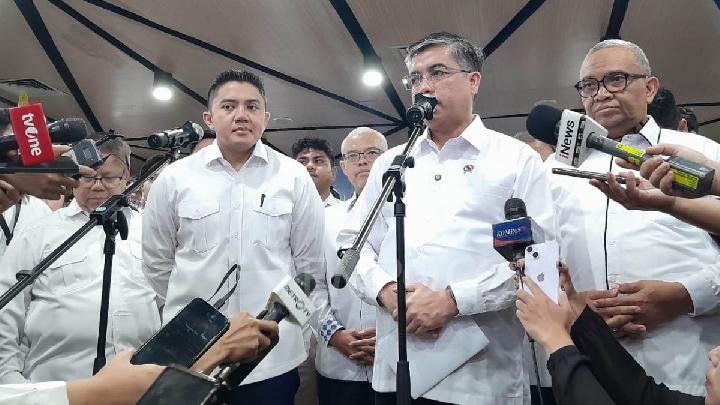
TEMPO.CO, Jakarta - The government is preparing a digital single ID system to improve the efficiency and accuracy of social aid distribution, as well as to support the development of micro, small, and medium enterprises (MSMEs). This was conveyed by the Chairperson of the National Economic Council, Luhut Binsar Pandjaitan, after meeting with President Prabowo Subianto at the Merdeka Palace on Tuesday, June 9, 2026.
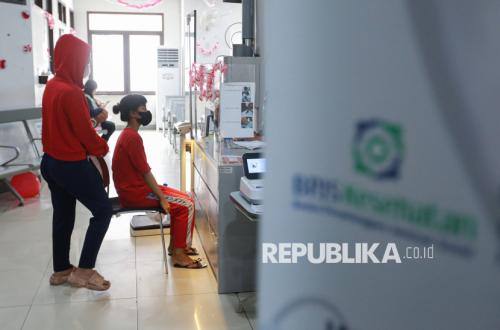
Luhut stated that the implementation of this system is targeted to begin by the end of 2026. "At the end of this year, there will be a digital single ID so that all social aid or direct cash transfers will be targeted. So, it will be accurate and will save a significant amount," Luhut said.
The President's Special Advisor for Digitalization and Government Technology explained that the digital single ID system is supported by the utilization of artificial intelligence that integrates all government data. With this digital single ID system, the government claims it will be able to identify and monitor the profiles of aid recipients more accurately.
"Subsidies will no longer go to goods. Subsidies will go directly to the recipients. On average, social aid comes in the form of cash transfers of around Rp 5.4 million per person," Luhut added.
Not only for social aid, Luhut mentioned that the digital single ID system will also be used to support the development of micro, small, and medium enterprises (MSMEs) by mapping the data of business players.
Currently, according to Luhut, around 80 percent of government technology (GovTech) systems across ministries and institutions have been integrated. Luhut noted that GovTech has become a crucial pillar in President Prabowo's administration. "Why? Because all the data will be well collected and no one can escape from it," he said.
Luhut explained that the development of GovTech is carried out efficiently by utilizing the existing digital ecosystem, such as PeduliLindungi, e-Katalog, and Simbara.
This system, Luhut said, is being developed by the country's young talents. Meanwhile, as part of the nationwide implementation, the government is currently carrying out pilot projects in 42 provinces, regencies, and cities.
"It has been implemented in Banyuwangi and was very successful. We learned from this model. Later, if these 42 pilot projects are successful, by October of this year, it will be rolled out nationally, connecting all 514 regencies," Luhut said.
Read: Prabowo Plans Affordable Generic Drugs for Indonesians
Click here to get the latest news updates from Tempo on Google News