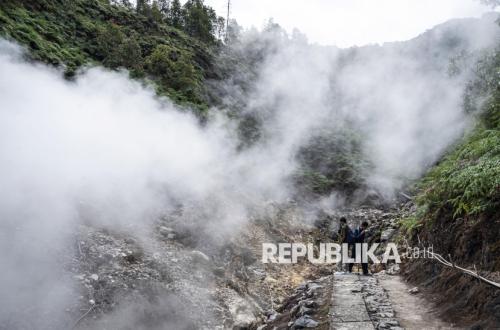
TEMPO.CO, Jakarta - Forest and land fires in Central Kalimantan have been linked to 72,431 cases of acute respiratory infection (ARI) as of the third week of August 2026, with Palangka Raya recording the highest number at 16,166 cases.
Wahana Lingkungan Hidup Indonesia (WALHI) Central Kalimantan Director Janang Firman Palanungkai cited the figures during an online discussion held by the ARI Coalition on Friday, September 18.
Janang said smoke from the fires could cause health problems beyond respiratory infections, including eye diseases.
“There are also eye diseases. We saw indications of that at the posts,” Janang said.
He said volunteers had operated smoke-relief posts since August 22, reaching 19 affected villages and seven communities. They have also provided smoke-safe shelters for residents, including children, infants, women, breastfeeding mothers, people with disabilities and older people.
Janang said volunteers became involved because the local government's response had not been effective enough, although the Central Kalimantan administration had allocated funds for the fire response.
He also criticized the deployment of civil servants to help tackle the fires, saying some lacked adequate protective equipment.
“Deploying people without personal protective equipment is like sending people to their deaths,” he said.
Janang said the haze could also contribute to clean water shortages, lower household incomes, disruptions to learning and limited access to health services.
Residents in Central Kalimantan have also faced fuel shortages and rolling power outages since June, he said. Together with the haze, he described the three problems as a “triple kill” for residents.
Janang urged the government to consider those risks when determining its response to the fires.
“The potential for chaos will only grow,” he said.
Haze Also Affects West Kalimantan
Maria, coordinator of the Society of Indonesian Environmental Journalists (SIEJ) in West Kalimantan, said residents in several parts of the province had also been dealing with haze for about two months.
Air quality deteriorated again between September 11 and 13, she said. In Kubu Raya, smoke from fires located about 300 meters from residential areas surrounded residents' homes.
“ARI cases reached 800 to 1,200 cases per day at one point,” Maria said, according to a written statement issued after the discussion.
She also highlighted difficulties accessing clean water, saying some residents had been forced to use saltwater for daily needs except drinking.
“Residents of West Kalimantan have not had their right to a good and healthy environment for two months. What kind of government is this? The government has been quite passive,” Maria said.
Maria also raised questions about around Rp60 billion in central government funding received by the West Kalimantan provincial government for fire management. Civil society groups, she said, want the funds to be used transparently and directed toward needs on the ground, including support for relief posts and volunteers.
“Community volunteers have been working with their own equipment and without pay,” she said.
Questions Over Fire Investigations
Janang also questioned the transparency of law enforcement efforts in forest and land fire cases, saying civil society groups had difficulty monitoring the process.
He cited data previously released by the Central Kalimantan Police showing 113 fire cases under investigation. Of those, 94 were at the inquiry stage and 18 had advanced to the investigation stage.
Thirteen cases allegedly involved companies, with seven advancing to the investigation stage. Suspects had been named in 27 cases.
Janang said authorities had not explained whether the suspects were companies or individuals.
Based on satellite data monitored by the coalition, he said fires in Palangka Raya appeared to originate from organized locations.
“We identified and suspect indications of a structured movement behind the fires,” Janang said.
Edy Kurniawan, advocacy manager for socioeconomic and cultural rights at the Indonesian Legal Aid Foundation (YLBHI), questioned an approach to law enforcement that focuses only on individuals who start fires.
He said investigations should also examine who was responsible for preventing fires, who held concessions where fires occurred, how fire prevention systems were implemented and whether those obligations had been fulfilled.
“The question is not only who started the fire. It is also who should have prevented the fire? Who holds the concession where the fire occurred? Who should have known there was a fire risk, and what adequate action was taken?” Edy said.
He said fire hotspots should serve as a starting point for investigations. Authorities should also examine companies' fire prevention systems, fire control measures, personnel training, monitoring and restoration obligations.
“The state must not hide behind companies or individuals. The state has a responsibility for prevention and law enforcement,” he said.
Calls for National Disaster Status
Edy said forest and land fires affect rights to health, education, a healthy environment and protection for vulnerable groups.
He said recurring fires showed the need to reassess the systems and funding prepared by the government to prevent disasters.
Edy also called for a stronger and more coordinated response. He said declaring the fires a national disaster could strengthen central government support for urgent needs, including firefighting, water supplies, health services, education, protection for vulnerable groups, support for volunteers and environmental recovery.
“Forest and land fires also require a response that does not stop at putting out the flames. Law enforcement must address the entire chain of responsibility, while victims need protection and recovery,” he said.