

Many community-based plants of renewable energy are abandoned. This has resulted from minimum commitment of the government and State Electricity Company (PLN).
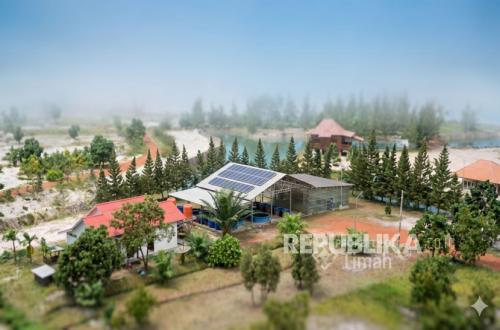
ALIVE yet barely surviving. Such is the fate of community-based renewable energy power plants. More than 30 power generators managed by communities are now floundering. Some are still operating, while others have been abandoned. There are also those supplying electricity to the State Electricity Company (PLN) grid but have lost their purchasing contracts.
This is the fate befalled on Jasa Peduli Kasih Cooperative the operator of a micro-hydro power plant in Kamanggih Village, East Sumba, East Nusa Tenggara. For three years, electricity from the plant has continued to flow into PLN’s grid without payment. The management faces a difficult choice: cutting off the supply risks disrupting the residents' electricity, while letting the turbines run means bearing the operational costs alone.
The Institute for Essential Services Reform found similar issues plaguing a number of community power plants. Initially, PLN purchased the electricity generated by the communities. Once the company's grid reached the villages and residents became PLN customers, the purchasing contracts were not renewed. Power plants that previously served as the village's sole source of electricity consequently lost their income.
The problem does not lie in the expansion of PLN’s grid. Rather, the government and PLN have failed to prepare a mechanism to ensure that community generators remain part of the national electricity system. As a result, assets built using state funds, grants, or community self-funding have lost their function and are left neglected.
Practices in various countries demonstrate that the national grid does not have to kill off communal power plants. Small plants can be connected to the grid, transitioning from local village electricity providers into renewable energy producers. State power companies buy their electricity through standard contracts and simple procedures.
Indonesia has not yet taken this path. Community-based renewable energy power plants have no clear place in the 2025–2034 Electricity Supply Business Plan (RUPTL). Without definite interconnection regulations and guaranteed electricity purchasing agreements, their fate is determined on a case-by-case basis.
In contrast, the government provides ample room for large-scale renewable energy projects and private developers. The energy transition is far more friendly to big capital than to the communities that pioneered energy independence long before. Yet, many communal plants were born out of government programs and built with state budgets or aid from donor agencies. Allowing them to die out means wasting years of investment and community effort.
Even the Ministry of Energy and Mineral Resources' Energy Patriot Program fails to answer this problem. While mentorship and energy potential mapping are undoubtedly useful, operational power plants require regulations that guarantee they can continue running and selling their electricity.
Community generators are not competitors to PLN. Their presence actually strengthens local power supplies and serves as an alternative energy source when the main grid experiences disruptions. Recent repeated blackouts in several regions underscore the importance of an energy system that does not rely entirely on a single major grid.
The government should integrate community-based renewable energy power plants into national electricity planning. PLN also needs to provide interconnection standards and special power purchase agreements designed specifically for small-scale plants. The public deserves a rightful place as electricity producers from renewable energy.
Indonesian Police Probe Rp5 Trillion Coal Corruption Case Linked to Blackouts
2 hari lalu
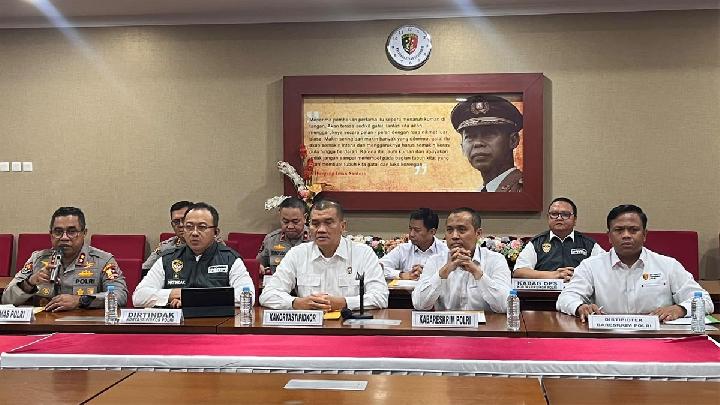
Indonesian police is currently investigating allegations of corruption in the procurement of coal supply for steam power plants
Indonesian Police Uncover Three Coal Corruption Schemes at Power Plants
2 hari lalu
The Indonesian National Police investigator suspects that the manipulation of quality, quantity, and payment for the supply of coal to a steam power plant (PLTU) has caused the state to incur approximately Rp 5 trillion in losses.
Coal Output Cuts
7 hari lalu
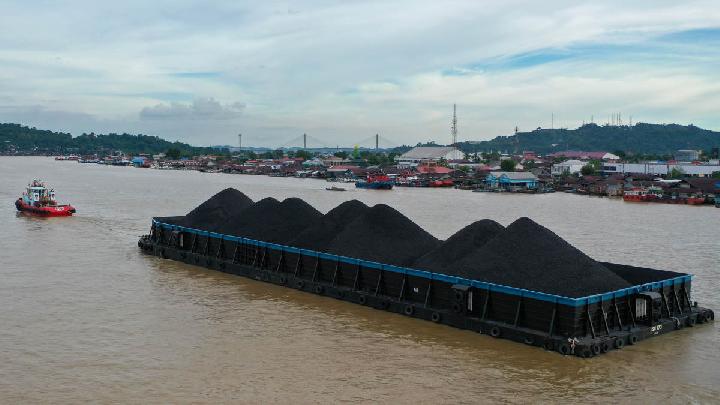
PLN struggled to obtain coal that met the specifications of its coal-fired power plants. Coal stockpiles ran thin after production quotas were cut.
Who's to Blame for the Blackouts?
9 hari lalu

The rolling blackouts were triggered by power plant failures and a shortage of coal supplies.
PLN Accelerates Coal Procurement for Power Plants
19 hari lalu
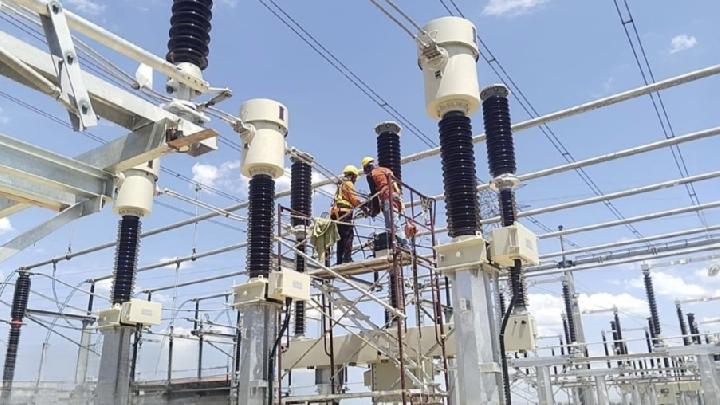
PLN CEO Darmawan Prasodjo claims that medium-rank coal has begun to flow to several power plants in Java.
Solar Power Megaproject for Village Cooperatives
46 hari lalu
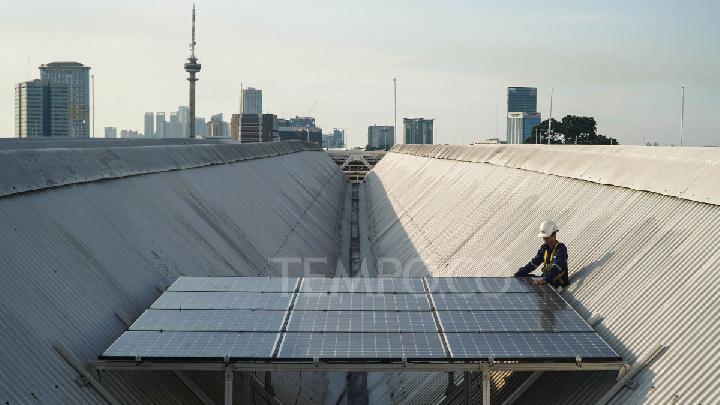
Government officials are scrambling to realize President Prabowo's ambitious 100-gigawatt solar power plant project.
Prabowo Sets 17-Gigawatt Solar Power Target for This Year
21 April 2026
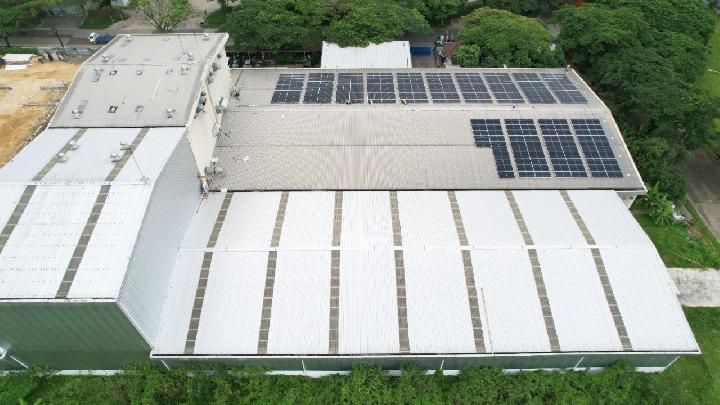
Prabowo urges for the rapid readiness of solar power plants to replace diesel-based power plants.
Trump Warns Iran of "Civilization Destruction" if Ultimatum Is Ignored
7 April 2026

President Trump warned that "entire civilization will perish" in Iran if the country does not heed his ultimatum to accept U.S. war demands.
Trump Warns of Possible Attacks on Iran's Power Plants, Bridges
6 April 2026

US President Donald Trump warned of possible attacks on power plants and bridges in Iran on Tuesday tomorrow.
IAEA Chief Warns: Nuclear Plant and Surroundings Must Not Be Attacked
5 April 2026

The IAEA chief said nuclear plants and surrounding areas must never be attacked, after the fourth strike near an Iranian facility.



































:strip_icc():format(jpeg):watermark(kly-media-production/assets/images/watermarks/bola/watermark-color-landscape-new.png,1125,20,0)/kly-media-production/medias/5215189/original/094397100_1746795977-20250509AA_Persija_Jakarta_vs_Bali_United-8.jpg)